
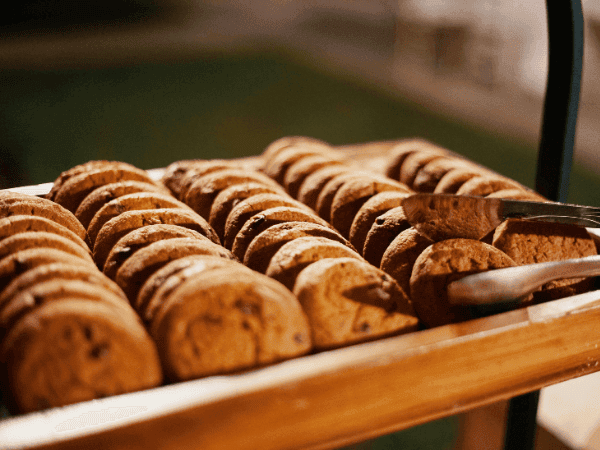
The year I started Cookie Cazimi, I didn’t think I would start a home bakery in Maryland. But, life has a way of surprising you, even if you feel like you’re starting over in your 30s.
If you’re looking to sell cottage food and have been overwhelmed with information, this three-part series will break down how I started a home bakery in Maryland. And if you still have questions, I know where you can get those answers!
In this blog post, I will be going over how I navigated cottage food laws in Maryland, so that I knew what I could sell to the public and how.
This blog post may contain affiliate links, which means I may earn a commission if you make a purchase through these links at no additional cost to you. The content provided is for informational and entertainment purposes only and should not be considered professional advice.
Please read the Disclaimer Policy for more information.
What does Maryland consider to be cottage food?
In general, cottage food refers to what you can make and sell from a residential kitchen. Exactly what those foods are varies by state.
The Maryland Department of Health (MDH) outlines what foods are allowed for cottage food businesses in the Guideline for Cottage Food Businesses but I’m going to breakdown the gist of it.
In the state of Maryland, cottage food is defined as “non-potentially hazardous/non-perishable” and can be “stored under normal conditions without refrigeration.”
Basically, you can sell food that doesn’t need to be refrigerated within 2 hours.
Breads, cookies, muffins, and bagels — anything you can keep on the counter is a-okay.
Highly acidic foods, like lemon, strawberries, and blueberries, and hard cheese, like cheddar and parmesan, are allowable as of writing this blog post.
Which, you might have noticed that the document doesn’t say this is “allowed” or this is “not allowed.” Instead it says “allowable” or “cannot be allowed.”
That’s because this is a guide, not a strict rulebook!
You can make whatever falls falls within the stated definition.
So, if you want to start your home bakery in Maryland selling focaccia, you totally can as long as you follow the guide and not include fresh vegetables or soft cheeses, etc.
What is not allowed under cottage food law in Maryland?
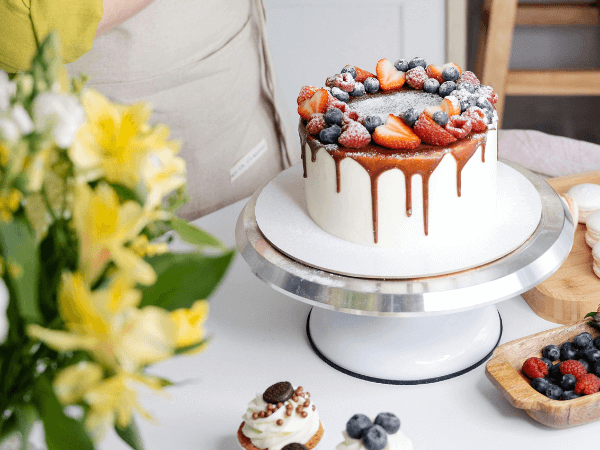
The Maryland Department of Health writes that “baked goods that require any type of refrigeration” cannot be allowed as cottage food. This includes toppings and fillings, like custards, meringues, and buttercreams.
Use of vegetables, meats, fish, etc. are also listed for those into baking savory foods.
I know it seems unfair but commercial kitchens undergo inspections and must follow additional food safety requirements, so they are allowed to sell more types of food.
In fact, I believe the intended purpose of selling cottage food in Maryland (and really any state) is to help fund the eventual move into a commercial kitchen and grow the local economy — or just make their landlord friends richer. I don’t know.
Of course, you don’t have to move or want to move into a commercial kitchen. I’m not.
I’m just saying that I think that’s part of the incentive and reason as to why cottage foods are limited for home bakeries in Maryland.
Oh, you also can’t make chocolate, meaning transform a cacao bean and doing who knows what to make it into chocolate. I don’t why the hell you’d want to do that, but you can’t.
You are allowed to use commercially made and available chocolate like a normal person.
What kind of fruit can I use for my cottage home bakery in Maryland?
Water activity and pH will tell you whether a food item is perishable or potentially hazardous.
So how is fruit allowed since there’s typically a lot of water in fruit? It’s the pH!
Fruits with a low pH of 4.6 or less are considered acidic. At these levels, bacteria growth is inhibited, which is why you’re allowed to sell cottage foods using apricots, apples, blueberries, citruses, cranberries, pineapples, pomegranates, raspberries, and strawberries — just to name a few!
Personally, I like to use commercially freeze-dried versions of these fruits in my chunky cookies because the moisture from my cookie dough will give the fruit a wonderfully chewy texture after baking.
And, also why foods like bananas, pumpkin, and zucchini are not allowed to be used in your cottage baked goods. You also can’t use freeze-dried bananas or powdered pumpkin because they could be reconstituted after baking. While this is only in theory, I did confirm this information with the MDH.
This is a bit of a sidebar tangent, but if you want to make a glaze for a lemon loaf, be sure to only use lemon juice and not water.
Water will make your glaze susceptible to bacterial growth because we’re increasing the water activity, whereas lemon juice is too acidic to let things grow even if there technically is water in the lemon itself.
What commercially made foods does Maryland allow in cottage baking?
Yes! You are allowed to use commercially manufactured food items as long as they don’t need to be refrigerated after opening.
I’ve used commercially made soft caramels as cookie filling and marshmallow fluff for a Hostess-inspired cupcake bar.
This also includes peanut butter, chocolate hazelnut spread, cookie butter, and pistachio butter/cream — so long as the instructions or company tells you to store at room temperature after opening!
Are there any exceptions as to what I can sell as cottage food for my home bakery in Maryland?
Remember, the Guideline from MDH said that low water activity and/or low pH determine whether a food can be “stored under normal conditions without refrigeration.”
So if it can, then it is considered a cottage food that you can sell from your home bakery in Maryland.
So, how can you prove it?
Get it tested.
There are food laboratories that will tell you what the water activity and pH of your baked goods are.
While I’ve personally never sent anything out for food laboratory testing, I have heard good things about the University of Arizona and Midwest Laboratories.
You will send out what you want tested as a fully finished product. If you forget an ingredient, you will unfortunately have to get it re-tested since it could materially change the outcome of the product.
If you plan on switching out extracts, like vanilla for cake batter, as long as something is there, you don’t need to re-test for each flavor because you use so little and they’re commercial products that are stable at room temperature after opening.
So, if you have a cheesecake recipe that passes, you can sell cheesecake… although I don’t think that’s actually possible!
Concluding Part 1
The hardest part of starting a home bakery in Maryland is figuring out what you can sell as a home baker.
While Maryland outlines what is and isn’t a cottage food, there’s a lot of nuance!
Whenever I’m confused, I just ask myself, “does this need to be refrigerated?”
And that usually does it for me.
In part 2, I go over labeling requirements and how I package my chunky cookies.
If you’ve already got that covered, but haven’t gone out to the farmers market yet, read more about what I learned my first year as a vendor.


How do you get a buisness name with a cottage buisness
Hi Jacqueline,
In Maryland, whether you’re operating as a sole proprietor or an LLC, you can register a Trade Name (Doing Business As / DBA) for the business name you want to operate under.
If you’re a sole proprietor and using your legal name, you don’t need a DBA. But if you want to operate under a different business name, you’ll need to register a Trade Name through Maryland Business Express.
An LLC registers its name when it’s formed, but you can also file a DBA if you want to operate under a different name.
I personally used a third-party service to help me set everything up. It’s not required, but it made the process easier for me.
Hope that helps!